
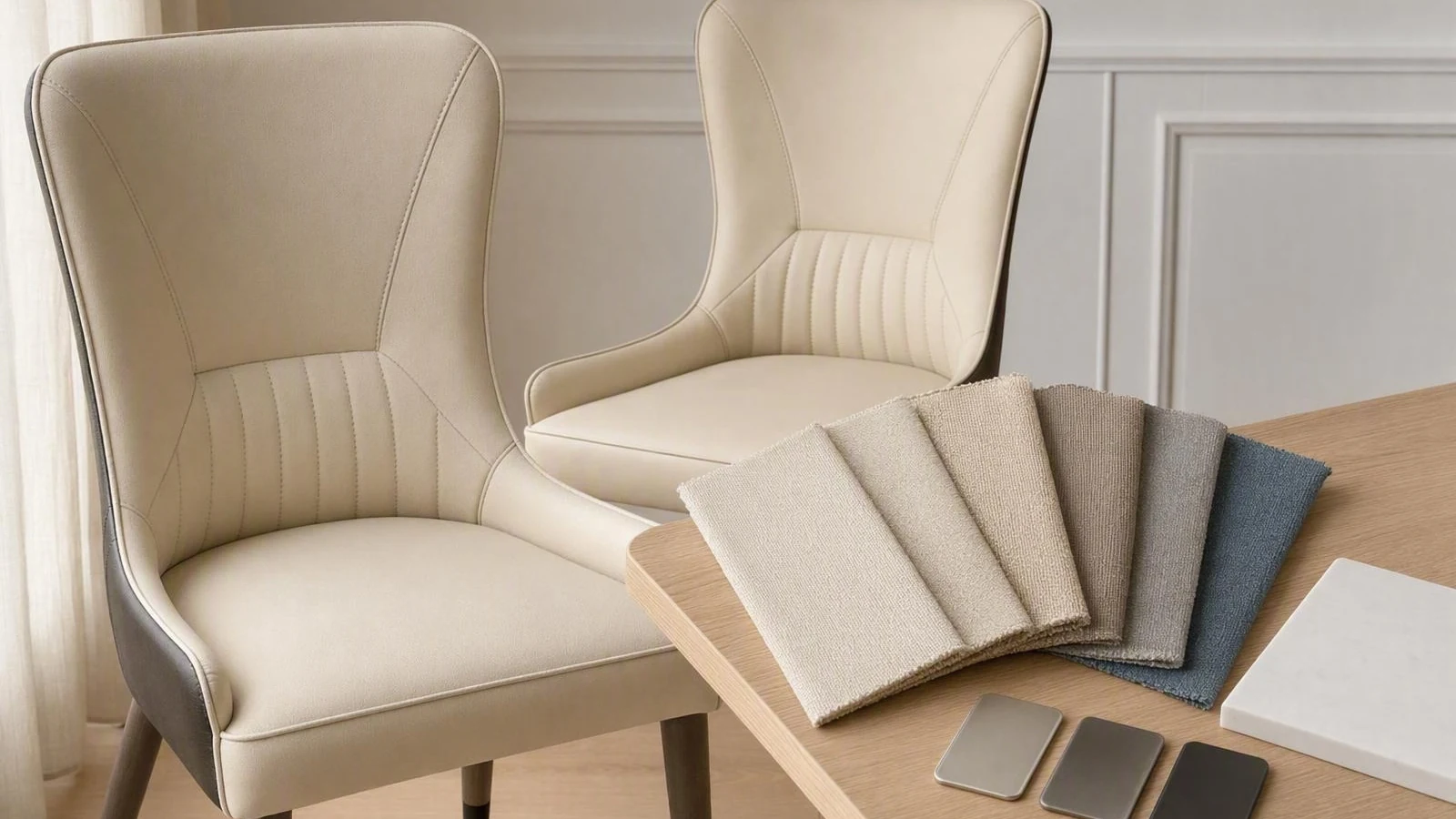
Cover: an AI-generated editorial illustration; confirm actual product and material options with RENOJU.
A dining table and a chair can both look appealing on their own yet feel unrelated when placed together. For a wholesale assortment, the challenge is to build a combination that customers can understand: a clear palette, compatible proportions and a consistent material story.
Begin with the intended room and customer, then review upholstery, frame finish and tabletop appearance as one set. The ideas below are a way to organize that review. They are not a list of guaranteed material or customization options; availability should be confirmed for each RENOJU model.
Choose a visual direction before choosing individual colors
Decide whether the range should feel soft and tonal, crisp and contrasting, or warm and textured. A restrained direction makes later decisions easier. For a tonal combination, compare the undertones of the upholstery and tabletop instead of matching only their general color names. For a contrasting combination, identify which element should draw attention and which should remain quieter.
A small sample board is useful: place the intended upholstery beside the frame finish and tabletop sample, then view them together. Avoid approving each piece separately from different photographs. Different lighting and camera settings can make unrelated samples appear more similar than they are.
Describe the upholstery beyond its color
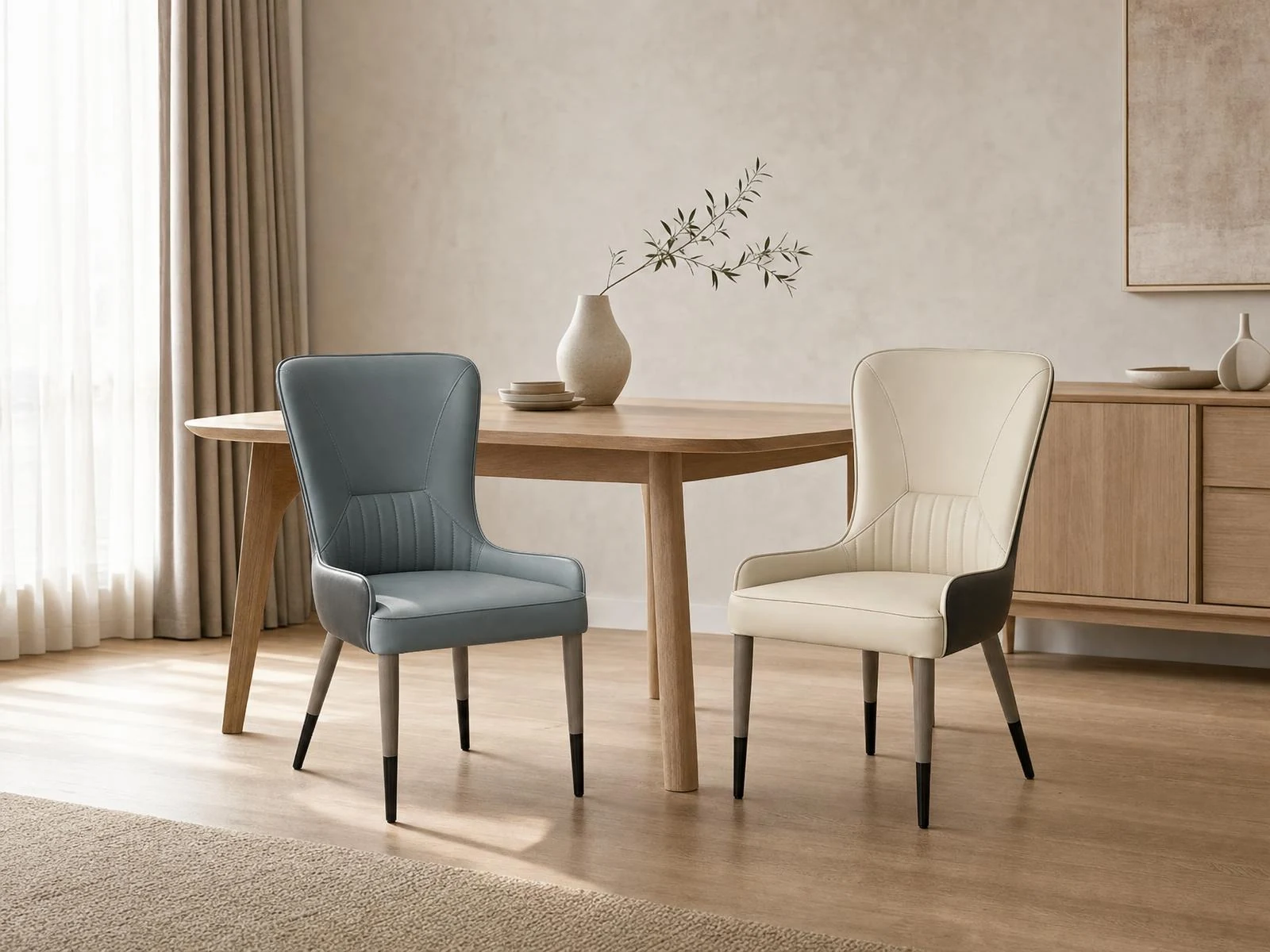
Ask for the supplier’s material description and sample reference. Review the visible texture, surface appearance, stitching, seam positions and the way the covering sits around the back and seat. A smooth pale surface and a woven pale surface may support the same palette while creating different visual effects.
For each shortlisted material, request the applicable care guidance and any supporting information your project requires. Do not infer composition, cleaning compatibility, wear performance or other suitability claims from appearance. If a retailer or project has a specific requirement, share it before sample selection so the exact proposed material can be assessed against it.
Use the frame finish to connect the set
The frame is visible from the side and across the room, not only in a front-facing product image. Compare its color and surface appearance with the table legs and nearby interior finishes. Two finishes with the same color name may differ in gloss or texture, so request samples or close-up views where the distinction matters.
Also look at the chair’s profile: back height, seat thickness, leg angle and any arms or side bolsters. A shared color does not automatically make two pieces feel coordinated. Ask for dimensions and review the silhouettes together before finalizing a merchandising combination.
Sample-review prompt: “Please identify the upholstery reference, frame finish and tabletop finish shown, and confirm which of these can be supplied on the selected model.” This keeps styling preferences separate from confirmed production options.
Confirm what the tabletop actually is
A white, stone-look or wood-look appearance describes a visual effect, not necessarily the underlying material. Confirm the top’s construction, surface finish, edge profile and thickness through the model specification. Ask for the care instructions applicable to that construction and any limitations relevant to the intended setting.
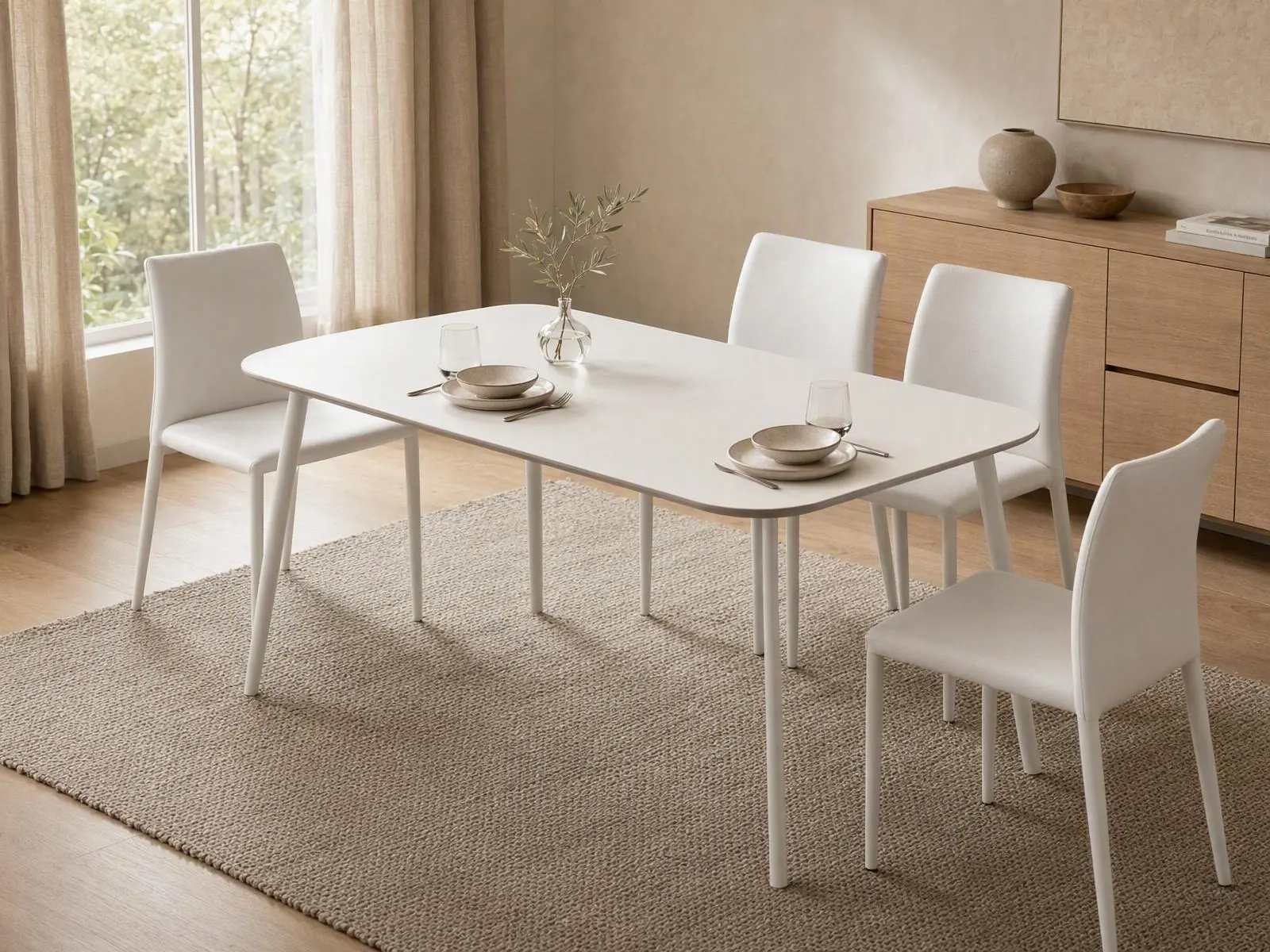
Review the table with the proposed chairs in mind. Check clearance beneath the top, the usable distance between the legs and the relationship between the seat height and tabletop height. Where the range will be photographed as a set, make sure the photographed combination matches the configuration being offered.
Keep physical sample approval traceable
Once the direction is agreed, assign a reference to each approved sample and retain the final sample set. Record the date, model, finish codes and any conditions of approval. If a covering or finish changes later, identify the replacement clearly and review the affected combination again.
For repeat orders, refer to the approved specification and sample references rather than relying on an old photograph alone. If consistency between batches is important to the range, discuss how it will be reviewed and what reference will be used. Any acceptance criteria should be agreed for the actual order.
A focused review checklist
- One clear design direction and intended customer or setting.
- Upholstery description, sample reference, texture and stitching review.
- Frame color, surface appearance and model availability.
- Confirmed tabletop construction, edge detail and care guidance.
- Table-and-chair dimensions checked as a combination.
- Approved sample references recorded in the final specification.
Develop a coordinated dining range
Browse the chair and dining table collections, then send RENOJU your shortlisted models and preferred palette. Ask which finishes and samples can be reviewed for that selection.