
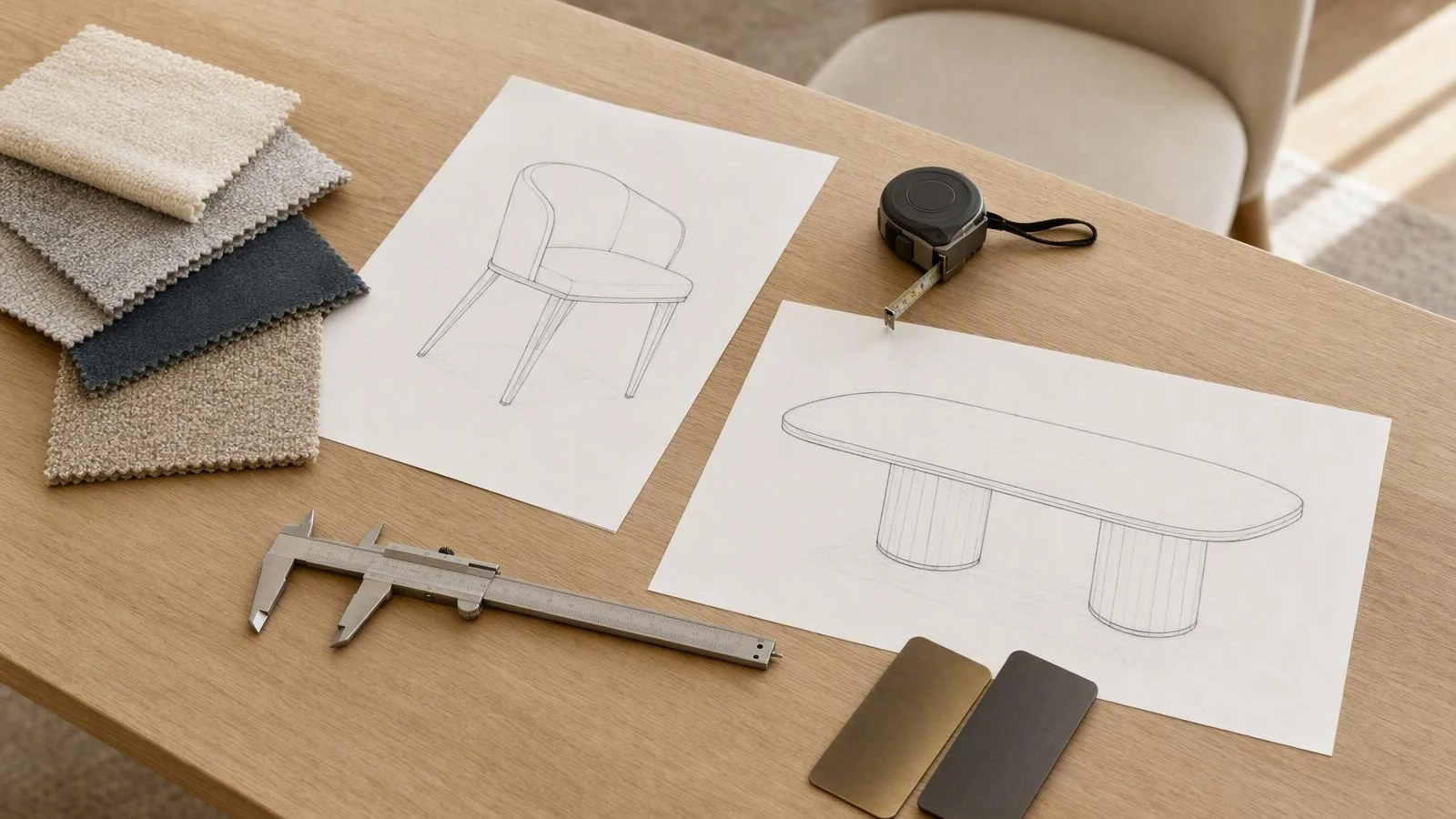
Cover: an AI-generated editorial illustration; confirm actual product and material options with RENOJU.
Furniture customization becomes easier to discuss when “what should change” is separated from “what must stay the same.” A reference image can establish a direction, but it cannot capture every dimension, finish, packing detail or approval condition.
For a dining chair or table project, prepare a brief that can evolve into an agreed specification. Whether the discussion begins with an existing model or a new design direction, RENOJU should first review the requested scope and feasibility. Not every change is available on every model, and a development inquiry is not a promise of production readiness.
1. Establish the starting point
Identify the model reference or attach your own design information. Explain the intended market and setting, the target quantity by configuration and the commercial priorities of the project. Describe which features are essential and which are preferences that can be discussed.
For an existing model, mark the proposed changes explicitly: for example, a different upholstery direction, frame finish, dimension or packing arrangement. Ask whether each request is feasible and whether it affects sample work, cost, minimum quantity or scheduling. Keep undecided points visible in the brief rather than filling them with assumptions.
2. Build one controlled specification
Give the brief a project name, revision number and date. Include drawings or dimensions, material descriptions, finish references and clear product views. If two images disagree, say which is the primary reference. Record whether dimensions are requirements to evaluate or already-approved production specifications.
- Chair: overall dimensions, seat height, back and seat details, frame appearance and any relevant clearance requirements.
- Table: overall dimensions, top construction and appearance, edge treatment, leg arrangement and assembly expectations.
- Shared details: quantity by configuration, sample references, hardware, labels, packing and required supporting documents.
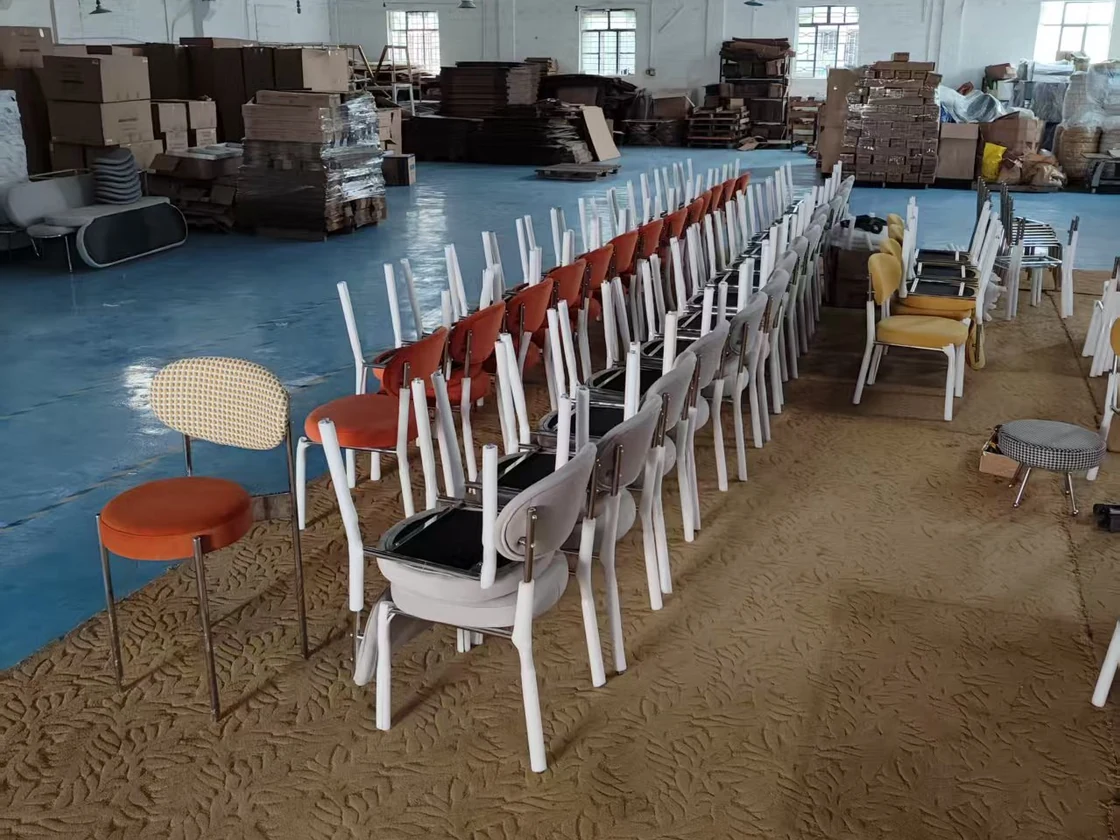
3. Agree what the sample is intended to confirm
Before arranging a sample, define its purpose. Is it for appearance review, dimensional review, assembly review, packing review or several of these? Ask which parts represent the intended final configuration and whether anything is temporary or still under discussion.
Confirm the sample arrangement, charges if applicable, delivery details and expected timing directly with the factory. If the project needs a particular evaluation or supporting report, discuss the exact requirement before approval. A good-looking sample alone does not answer every question about the finished order.
Keep the sample discussion specific: “This sample is approved for color and appearance only; the revised packing and final dimensions remain open.” Limited approval is clearer than a general “approved” when work is still outstanding.
4. Review the sample with a recorded checklist
Compare the sample against the current brief, not against several versions of past messages. Check the agreed dimensions, material references, finish appearance, visible seams and edges, and the supplied components. Review assembly using the supplied instructions where relevant, and note questions or requested changes with annotated photographs.
Separate observations from decisions. “The frame looks darker under our showroom lighting” is an observation; “review the finish against sample reference X before approval” is an actionable next step. Name the person responsible for resolving each open item and retain the revised record with the project.
5. Review packing as part of the configuration
Confirm how the product and components will be protected, the proposed carton arrangement, the labels and the assembly materials included. If your distribution process has specific handling or identification needs, share them early enough for review.
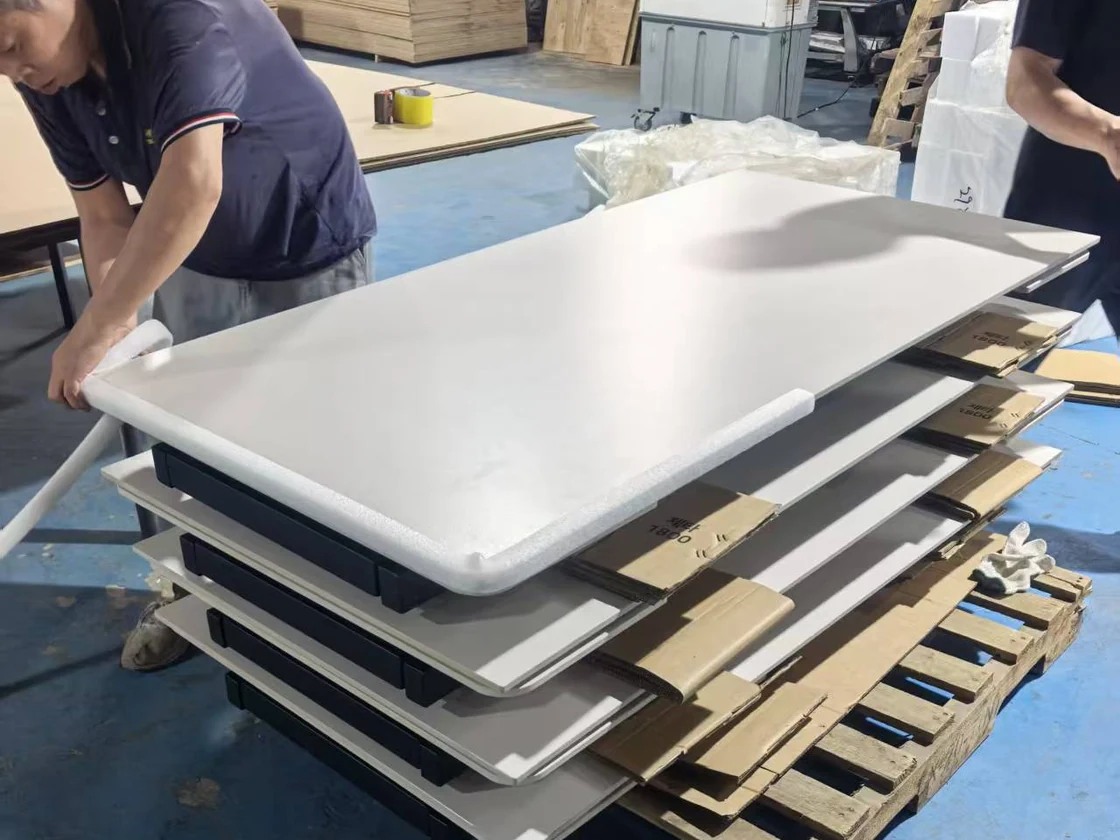
Request updated packing dimensions and weights when the configuration changes. Ask which figures are estimates and which have been checked on the approved arrangement. Keep any requested packing evaluation separate from assumptions based on a single photograph.
6. Close the brief before production discussions advance
Combine the approved drawing revision, sample references, quantity breakdown and packing details into one final record. Identify the approved sample and the person who gave approval. If changes are requested afterward, issue a new revision and ask how they affect the quotation and schedule before proceeding.
This process gives both sides a clearer basis for communication. It also leaves a useful reference for a repeat order: the agreed product is defined by its recorded configuration, not only by its name or a promotional image.
Have a customization brief to review?
Visit our OEM & ODM page and send your model reference or design direction, proposed changes and quantity breakdown. RENOJU can review the requested scope and identify the points that need confirmation.