
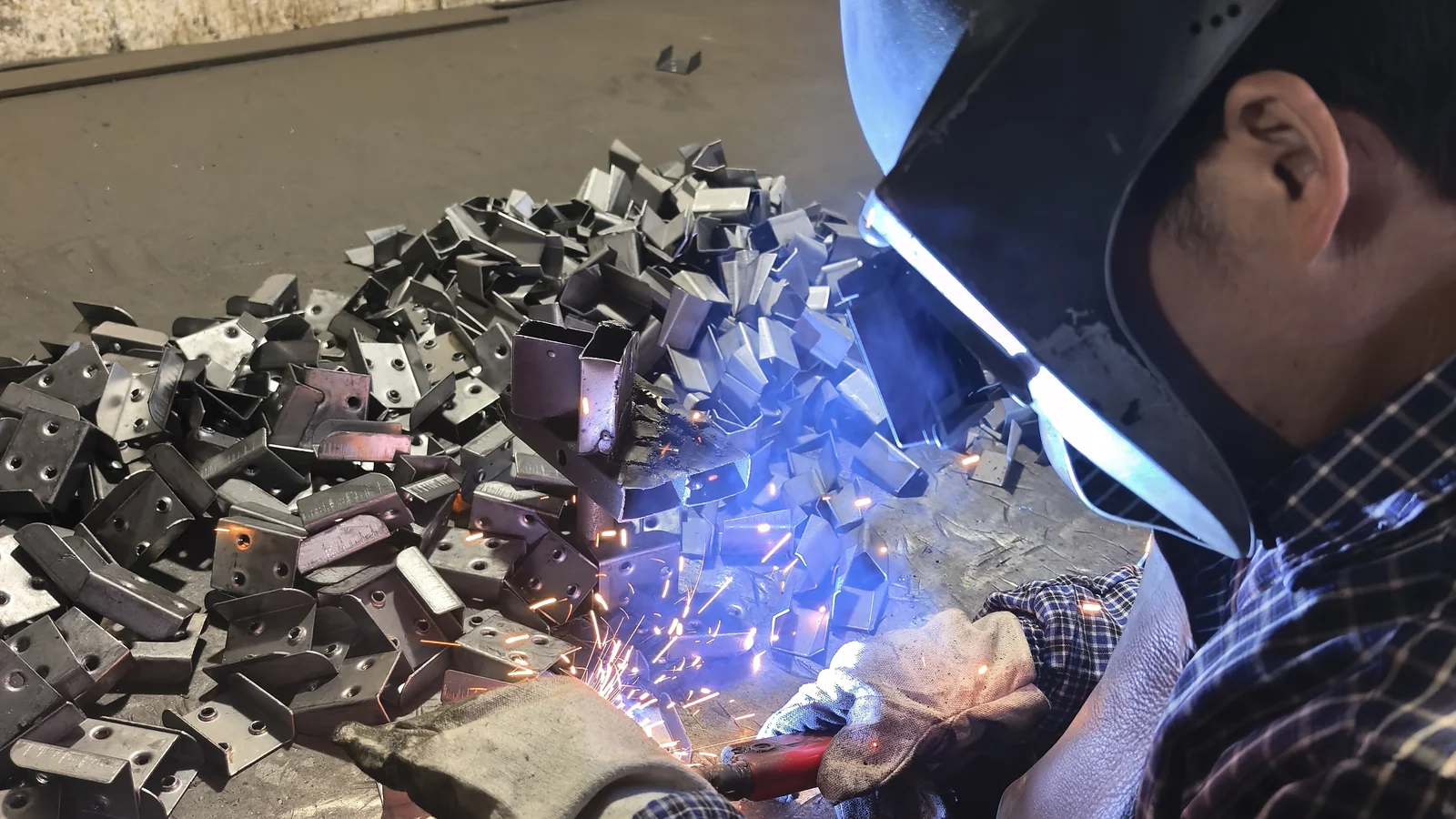
Cover: an actual RENOJU workshop photograph.
Factory photographs are most useful when they lead to specific questions. They can show a work area, a handling method or a product at a particular stage, but they do not replace the agreed specification, an order-specific review or any supporting documents your project requires.
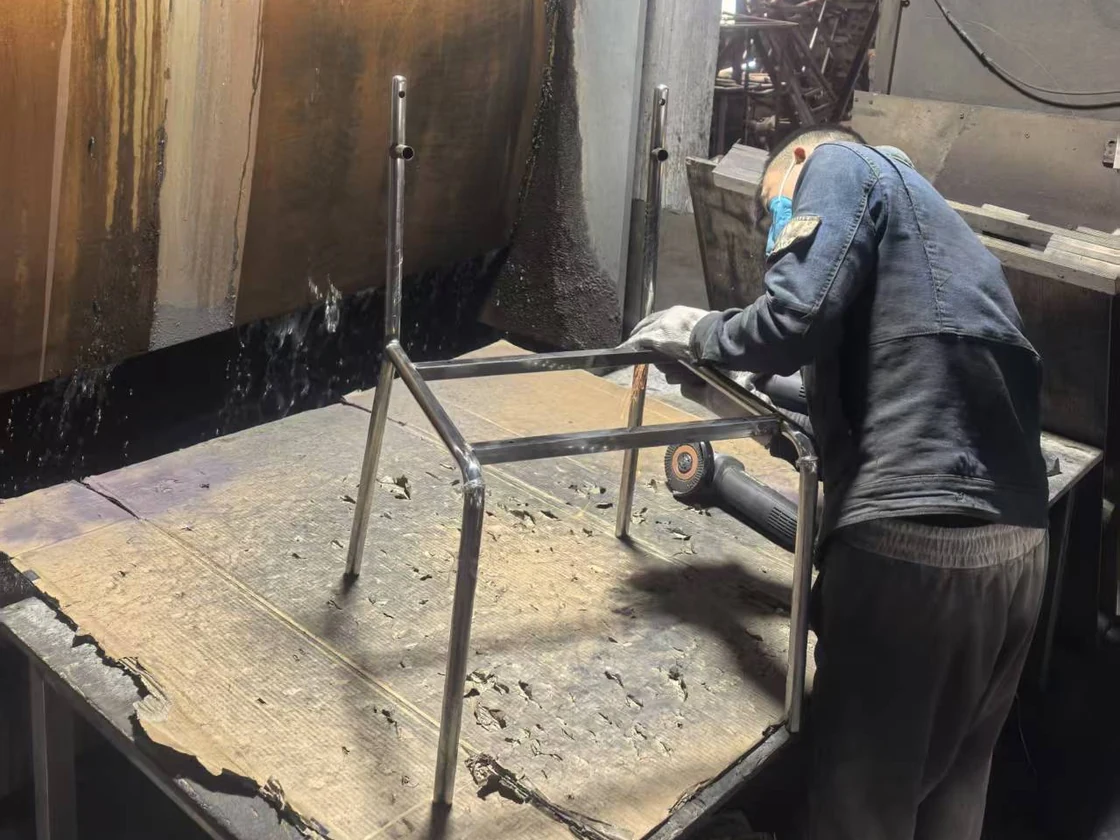
The photographs in this article were supplied by RENOJU and show real workshop activity, including metal component work, chair batches and protective handling of tabletops. The checkpoints below explain what a buyer can ask about these visible stages without treating the images as proof of an inspection result.
Metal components: connect the work to the specification
The cover photograph shows a worker welding small metal components at a workbench. The useful sourcing question is not simply whether welding takes place, but how the components for your selected product are defined and reviewed against the agreed configuration.
Ask which drawings or product references will be used for the order, how revisions are identified and what review points apply to the finished component or frame. If your project requires particular supporting information or evaluation, specify it before the order is finalized. A photograph cannot establish a load rating, a certification or a test result.
Chair batches: keep model and finish details traceable
Rows of chairs show why a clear model and finish breakdown matters. Products that look similar from a distance may have different upholstery, frame colors or other configuration details. Buyers should provide quantities by variation and ask how those variations will be identified through the order.
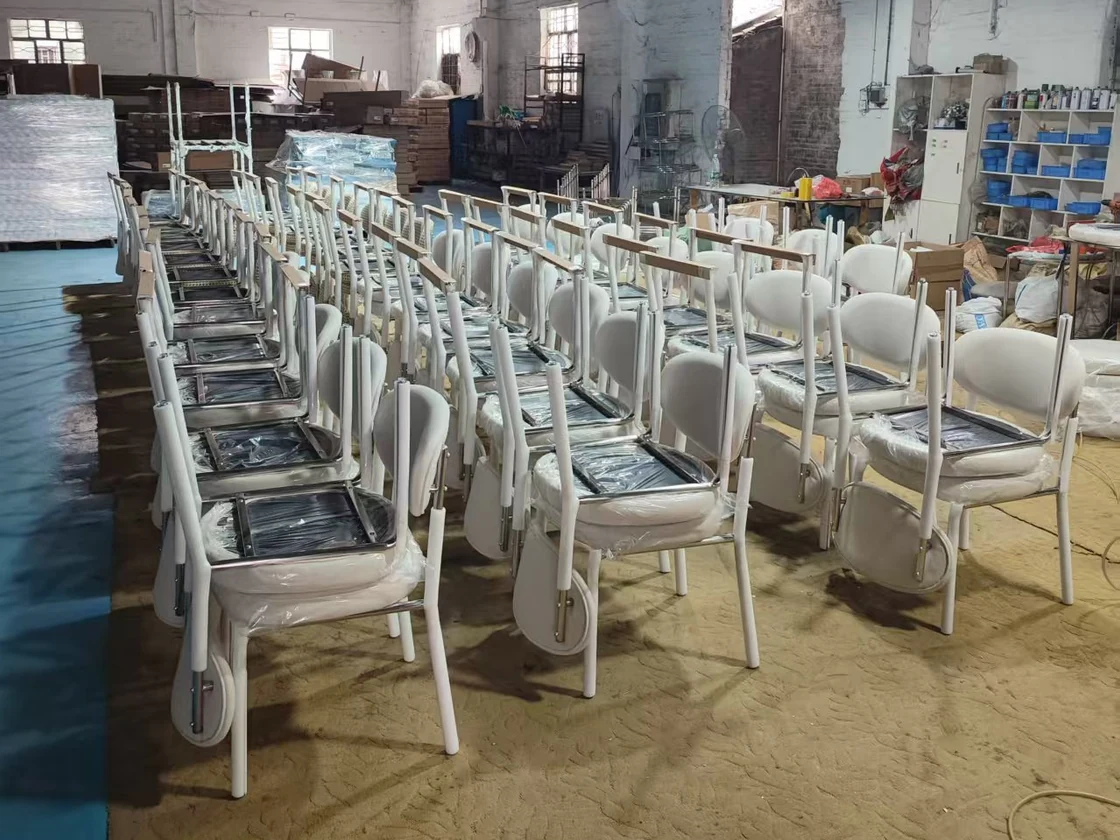
For an order review, request the model references and the agreed material or finish codes alongside the photographs. Ask for any agreed dimensional or appearance checks to be recorded against those references. General workshop images provide context; the evidence for an individual order should identify the goods being reviewed.
Tabletop protection: look at edges, surfaces and contact points
The image below shows workers placing protective foam around white tabletops on a pallet. Edges and surfaces are useful starting points for a packing discussion because they help the buyer and factory describe exactly where protection is expected.
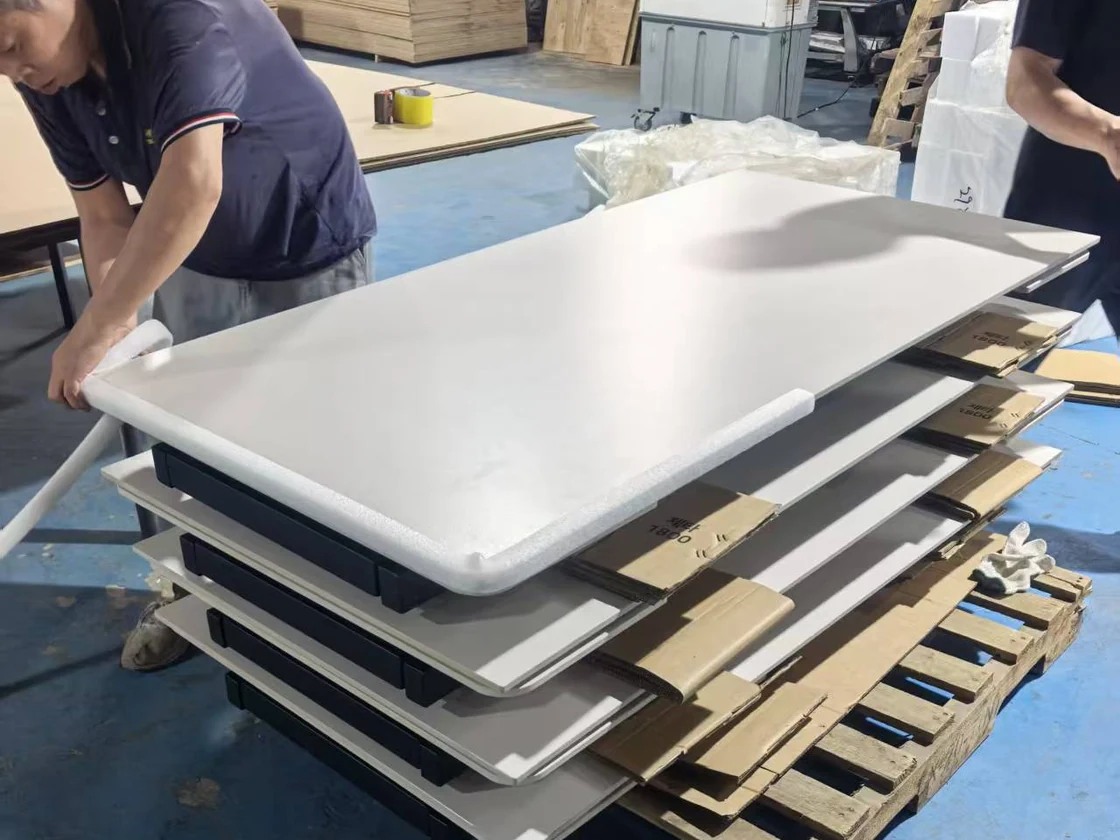
Ask how the final arrangement addresses contact between parts, loose hardware, surface protection and movement inside the package. Confirm whether the item is supplied assembled or in components, and request the appropriate assembly information where relevant. Describe your receiving process and onward handling so the packing discussion reflects the intended route.
Agree the order-specific review before shipment
Set out what needs to be checked and what record you expect to receive. Depending on the project, this might include model and finish identification, agreed measurements, quantity checks, packing photographs, carton labels and assembly components. The scope and acceptance criteria should be confirmed with the factory for the actual order.
If you plan a separate inspection or a particular evaluation, agree its scope and timing in advance. Do not infer that a visible production activity means such an inspection has already happened. Likewise, a photograph of foam protection does not by itself establish a particular packaging-test outcome.
A practical request: “Please show the agreed model and finish references, the packing arrangement, carton identification and the specific checks included in our order review.” This gives the factory a clearer brief than asking only for “quality photos.”
Five questions to add to your sourcing brief
- Which product specification and sample revision will the order follow?
- How will model, color and quantity variations be identified?
- Which agreed dimensions and appearance details will be reviewed?
- What is included in the final packing and assembly arrangement?
- Which photographs, records or other agreed documents will be supplied for the order?
Use these questions to connect the workshop view to your own buying requirements. The goal is a shared understanding of the product and its handling, with clear records for the points that matter to your business.
Discuss the details of your next order
Send RENOJU the dining chair or table models you are considering, the quantity breakdown and your packing or review requirements. We can discuss the information needed for your particular sourcing brief.